
Product & catalogue
Products, variants, categories, prices, images and availability need one dependable source.

E-COMMERCE SYSTEMS · SHOPIFY · WOOCOMMERCE · CUSTOM
OJC Labs designs and connects the systems behind online selling: catalogue, checkout, payments, orders, inventory, fulfilment, customer data and conversion tracking.
We work with Shopify, WooCommerce and custom e-commerce architectures depending on what your team needs to manage, automate and integrate.
E-commerce website development · Payments · Inventory · Fulfilment · Tracking
FROM PRODUCT TO ORDER
A customer sees one storefront. Behind it, product information, stock, checkout, payment, order status and fulfilment may come from different systems.
The architecture needs to define which system owns each piece of information and how changes move between them.

Products, variants, categories, prices, images and availability need one dependable source.
The customer must be able to choose, review and confirm an order without unnecessary friction.
The checkout must connect to the payment methods and payment gateway appropriate for the market and operating model.
A confirmed order needs to reach the people or systems responsible for preparation, stock and fulfilment.
The order should remain connected to the customer record so service, CRM, email and future communication have the right context.
The storefront is only the visible layer. The operating system behind it determines whether orders can be processed reliably.

E-COMMERCE WEBSITE
The exact stack depends on the business, but a working e-commerce store usually has to solve the same operational questions.
How are products, variants, prices and availability managed?
A clean, structured catalogue also feeds Meta's product ads, so this setup work carries over directly.
What information must the customer provide before the order can be confirmed?
Which payment gateways and payment methods need to be supported?
Where does available stock live, and what happens when it changes?
Who prepares the order, selects the delivery method and updates the shipment status?
Which actions need to be measured, and where does the customer record continue after purchase?
E-COMMERCE PLATFORMS
The best e-commerce platform is the one that fits how your catalogue, content, payments, fulfilment and integrations need to work.
A managed e-commerce platform for businesses that want a structured store environment with hosting, checkout and a large app ecosystem handled within the platform.
The business wants a managed platform and most requirements can be handled through Shopify, its APIs and supported integrations.
ConsiderSubscription and transaction model · app dependencies · checkout constraints · integration requirements
A WordPress-based e-commerce system that combines store functionality with a flexible content publishing environment.
Content, SEO, publishing and commerce need to live closely together and the business wants more control over the WordPress stack.
ConsiderHosting · plugin dependencies · maintenance · performance · checkout extensions
An architecture where the public storefront, commerce engine and supporting systems can be separated and connected through APIs.
The business has unusual workflows, multiple systems, complex integrations or customer experiences that do not fit comfortably inside a standard platform.
ConsiderDevelopment cost · ownership · integration responsibility · ongoing maintenance
Platform choice should follow operational requirements, not precede them.
Compare rendering, metadata control and editorial responsibilities.
Read the guide →Decide whether separated frontend and content responsibilities justify the complexity.
Read the guide →PAYMENTS
Connecting a payment provider is not only a technical integration. The store also needs to know what happens when a payment succeeds, fails, remains pending or is refunded.
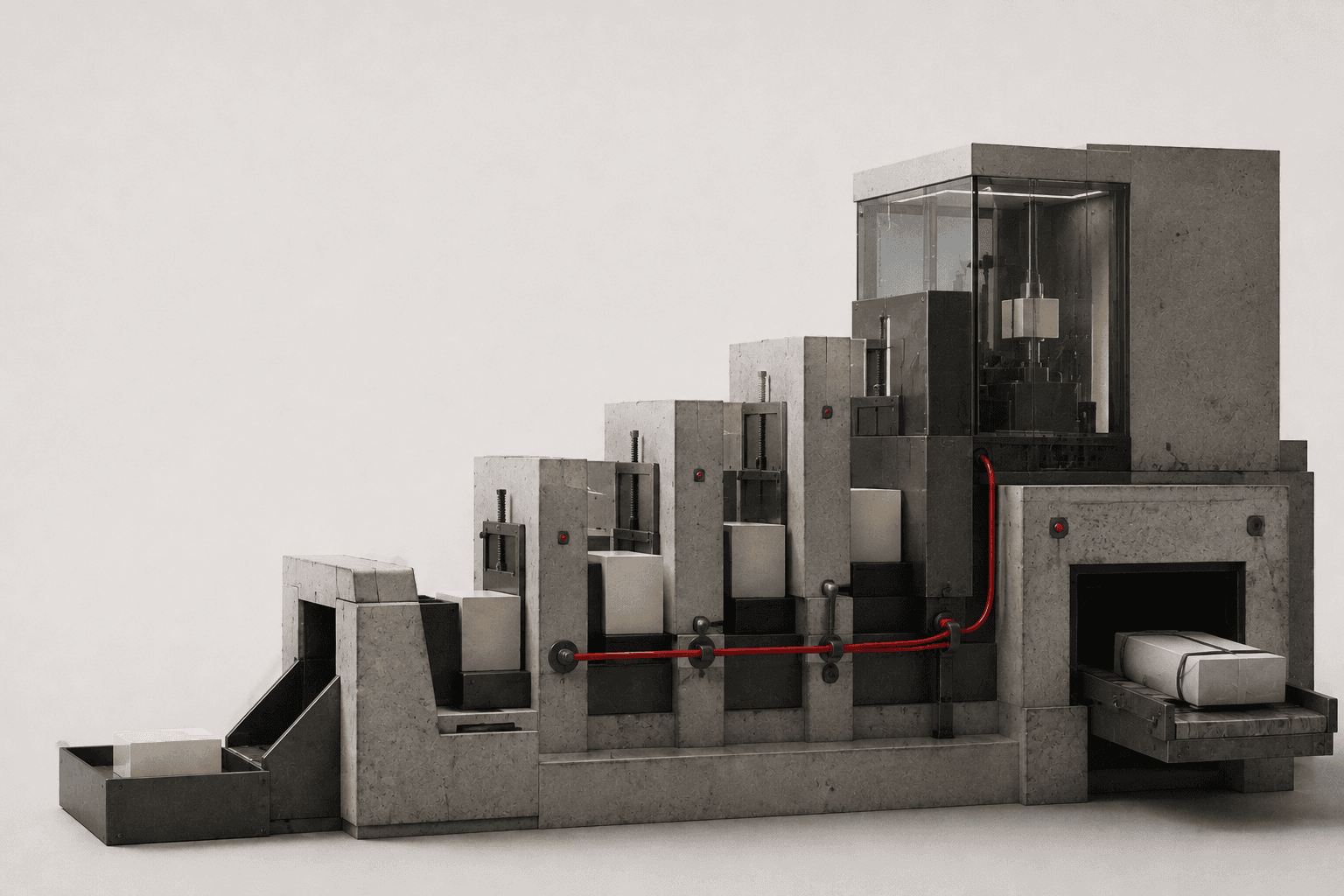
Which cards, wallets or local payment methods must customers be able to use?
How does the store know whether an order is paid, pending or failed?
At what point should the order enter fulfilment?
How are payment changes reflected in the order and the systems used by the team?
OJC Labs can integrate supported payment gateways into the agreed e-commerce architecture. Availability, merchant approval, fees and settlement remain subject to the selected payment provider.
OPERATIONS
INVENTORY
Inventory becomes important as soon as products, warehouses, retail locations or external systems can change availability.

FULFILMENT & SHIPPING
After checkout, the business still has to prepare, dispatch, deliver and update the order.

Inventory defines what can be sold. Fulfilment defines what happens after it is sold.
OJC Labs does not operate warehouses or delivery fleets. We connect the e-commerce system to the agreed operational tools and providers where supported.

CONNECTED COMMERCE
As the operation grows, the commerce platform may need to exchange information with CRM, email, inventory, ERP, analytics, advertising and fulfilment tools.
Integration should remove duplicate work, not create another layer the team has to maintain manually.
E-COMMERCE TRACKING
A purchase is the strongest conversion signal, but earlier events help explain where customers leave the journey.
Depending on the architecture, OJC Labs can configure GA4, Tag Manager, Meta Pixel, Conversions API and other agreed tracking tools around the store.

Define, trigger and validate the event through a representative journey.
Read the guide →Find where website, platform and business records stop agreeing.
Read the guide →Understand what attribution can explain and where certainty ends.
Read the guide →
E-COMMERCE SEO
E-commerce SEO becomes harder when filters, variants, categories and product URLs create duplicate or low-value paths. The store architecture should make important pages discoverable without generating unnecessary indexation noise.
Organise products into pages that match useful search intent instead of relying only on individual product URLs.
Keep titles, descriptions, availability and product information clear and accessible.
Control which combinations should become crawlable or indexable pages.
Connect categories, products, supporting content and commercial pages so important URLs are not isolated.
Plan topic ownership, route depth and discovery for a growing website.
Read the guide →Compare rendering, metadata control and editorial responsibilities.
Read the guide →Connect page delivery to user experience and search access.
Read the guide →E-COMMERCE EXPERIENCE
A polished homepage is not enough. Product discovery, product detail, cart, checkout and post-purchase communication all affect whether the customer can complete the journey.

Customers can reach the right category or product without unnecessary searching.
Product information, pricing, availability and delivery expectations are clear.
The page gives customers enough information and confidence to continue.
Cart and checkout remove unnecessary steps instead of adding them.
Good e-commerce website design supports the buying process from discovery to confirmation.
B2B E-COMMERCE
A B2B e-commerce platform may need account-specific pricing, quote workflows, repeat ordering, sales-team involvement, payment terms or integrations that are less common in direct-to-consumer stores.

The correct architecture depends on the sales process, not simply whether the transaction happens online.
RESPONSIBILITIES
CONNECTED SYSTEMS
Connect product, checkout and purchase events to acquisition measurement.
Explore Ads & Tracking →Connect customers and orders to service, retention and follow-up.
Explore Email & CRM →Move order, customer and operational data between the systems that need it.
Explore Automation & Data →Investigate where customers abandon, convert or encounter friction.
Explore Growth Engineering →E-COMMERCE DEVELOPMENT
Our e-commerce development service covers the commercial implementation: storefront, platform, checkout, integrations, tracking and the agreed launch scope.

IN PRACTICE
ComfortZone, a furniture retailer, used Meta Ads to generate attributed messaging conversations at a measured cost per conversation. It is a retail acquisition case rather than a full checkout build, but the same measurement discipline — knowing which campaign produced which customer action — applies directly to e-commerce tracking and attribution.
FIELD NOTES
Architecture
How URL roles, site architecture and internal relationships affect search at scale.
Read the guide →CMS
Compare rendering, metadata control and editorial responsibilities.
Read the guide →Headless
The migration risks around redirects, internal links, rendering and structured data.
Read the guide →GA4
Define, trigger and validate the event through a representative journey.
Read the guide →Attribution
Understand what attribution can explain and where certainty ends.
Read the guide →Funnel
Diagnose where and why useful demand stops moving.
Read the guide →
FAQ
There is no universal winner. Shopify reduces some infrastructure responsibility, while WooCommerce gives a WordPress-based business more control over content and the underlying stack. The right choice depends on catalogue, integrations, publishing, maintenance and checkout requirements.
Yes. OJC Labs can scope the store architecture, platform, catalogue structure, checkout, integrations, tracking and launch requirements as part of an e-commerce development project.
Yes. We can work on an existing store when the required access and platform support are available. The scope may include checkout, tracking, performance, architecture, integrations or other agreed improvements.
Yes, when the selected provider offers a supported integration or API. Merchant approval, transaction fees, settlement and provider-specific requirements remain between the business and the payment provider.
We can configure or connect inventory flows where they are part of the agreed technical architecture. OJC Labs does not operate the physical inventory itself.
We can connect supported fulfilment, delivery or operational tools to the store. Warehousing, packing and delivery operations remain with the business and its providers.
Yes, when those connections are part of the agreed architecture and the selected tools provide the required integration methods.
OJC Labs can include technical SEO, indexation, structured architecture and related implementation within the agreed e-commerce scope. Broader SEO strategy can also be handled through our SEO services.
NEXT STEP
Bring us your products, selling model, payment requirements and current tools. We will map the store architecture, identify the systems that need to connect and define the implementation scope.