OJCLabs

OJC LABS CASE STUDY · AI VIDEO PRODUCTION AUTOMATION

AI video production automation for repeatable marketing content

AI video production automation turns an approved production brief into a repeatable chain for scripts, voiceovers, footage, captions, rendering and delivery without rebuilding the same format by hand.

OJC Labs tested a complete production system that turns approved source content into a short-form script, generated voiceover, selected or AI-generated footage, captions, branded composition and final vertical MP4. Once the inputs were ready, the validated assembly renderer produced a one-minute video in less than 40 seconds.

The service opportunity is not “press a button and receive cinema.” It is content and production automation for repeatable video formats where speed, consistency and volume matter, with generative-video models added where they improve the actual format.

Poster frame from the validated AI-assisted vertical video production output.
Production proof video coming soon
Static production-proof poster from the measured local rendering test.
Under 40 secondsto render a one-minute video after input preparation
Seven unique portrait clipsselected and deduplicated per production run
Three controlled pickup attemptsprotecting the final output
Local Docker and FFmpeg renderingwithout a paid cloud-rendering platform
Human approval before executionand manual platform upload where access required it

The production constraint

When AI video production automation removes repetitive editing work

AI video production automation is useful when a marketing team repeatedly produces explainers, product updates, expert clips, recaps, cutdowns or campaign variants from a defined format.

The creative direction may already be settled, but the production chain remains manual:

  • Rewrite the source into a short script
  • Generate or record the voice
  • Search for portrait footage
  • Check durations and remove duplicate clips
  • Download and rename the files
  • Assemble the timeline
  • Add captions and branding
  • Export in the correct format
  • Move the video somewhere the social team can access
  • Repeat the ritual tomorrow.

This is expensive because skilled people spend time reproducing a known assembly pattern instead of improving the story, the campaign or the creative concept.

OJC Labs built the video pipeline as part of its validated AI content automation system, testing which parts could become infrastructure and which decisions should remain human.

Why OJC Labs validated it in the Lab

Why AI video production automation depends on reliable file movement

AI video production automation only becomes a dependable service when scripts, audio, footage, temporary assets and final files move through predictable locations without silent failures.

The Lab test covered:

  • Structured script and keyword generation
  • SSML voice preparation and Text-to-Speech output
  • Portrait stock-video retrieval
  • Duration filtering and link deduplication
  • Predictable input and output folders
  • Docker bind mounts between n8n, the host and the renderer
  • Audio-length matching and dynamic clip trimming
  • FFmpeg concatenation, captions, audio and outro handling
  • Timestamped output naming
  • Cleanup of temporary assets
  • Retry behavior when the finished file was not immediately available
  • A deliberate human gate before the rendering container ran.

OJC Labs also tested a separate Veo image-to-video workflow for animating a static avatar into an eight-second 9:16 MP4. Google's documented image-to-video process uses a long-running operation; the Lab workflow validated the request, polling, result retrieval and Base64 file conversion. It did not replace the main Docker and FFmpeg renderer and is not mixed into its performance results.

Two production engines, one governed system

How AI video production automation combines assembly and generative video

AI video production automation can use deterministic assembly for repeatable branded formats and generative video for scenes or movement that do not already exist.

How AI video production automation uses a controlled assembly pipeline

AI video production automation uses controlled assembly when scripts, voice, qualified footage, captions, branding and FFmpeg rendering must produce a predictable format at a controlled production cost.

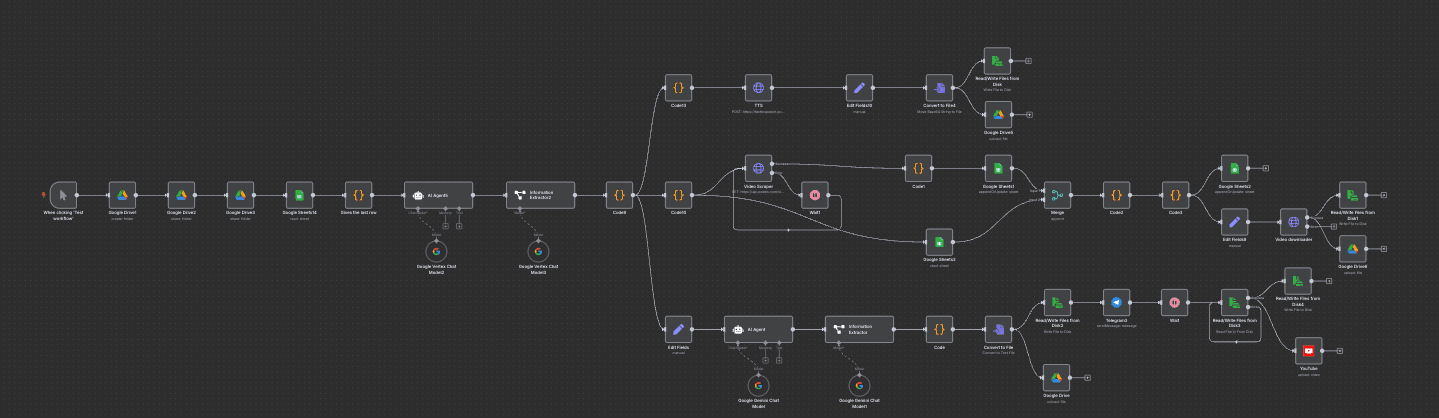
Text-to-Speech workflow proof from the automated video assembly system.

How AI video production automation uses generative video

AI video production automation uses a generative-video branch when the brief requires original motion, generated scenes or avatar animation rather than retrieved footage.

@ai.is.mid Progress, babe? More like *pro-mess*. Are we ascending or just perfecting the art of digital despair? Tune in before the glitch consumes us all: https://aiismid.oussemadjemaa.com/episodes #BlackMirrorIRL #DigitalDystopia #GlitchInTheMatrix #Techlash #DoomerOptimism #FutureIsBleak #IRLnightmare ♬ Summermode - Official Sound Studio

Both branches still require the same production discipline: approved inputs, defined output formats, validation, retries, storage and a human decision before distribution. The value is not access to a generator. It is the operating system around generation.

What the video operating pipeline did

How AI video production automation moves from approved content to final delivery

AI video production automation connects generation, assembly, rendering, validation and delivery through one production contract rather than a collection of disconnected AI tools.

  1. 01

    How AI video production automation prepares the production brief

    AI video production automation begins with an approved title, short-form script and keyword set stored as structured data rather than an uncontrolled prompt response.

  2. 02

    How AI video production automation produces the voice track

    AI video production automation converts the approved script into SSML-controlled speech and saves the resulting voice track into the shared production layer. The platform's Google Text-to-Speech SSML documentation establishes those controls.

  3. 03

    How AI video production automation retrieves and qualifies footage

    AI video production automation turns the keyword set into a portrait-footage search, filters clips by duration and prevents earlier selections from being reused unnecessarily. The search used the documented Pexels API, and the workflow chose seven unique videos to reduce repetition.

  4. 04

    How AI video production automation stages files for rendering

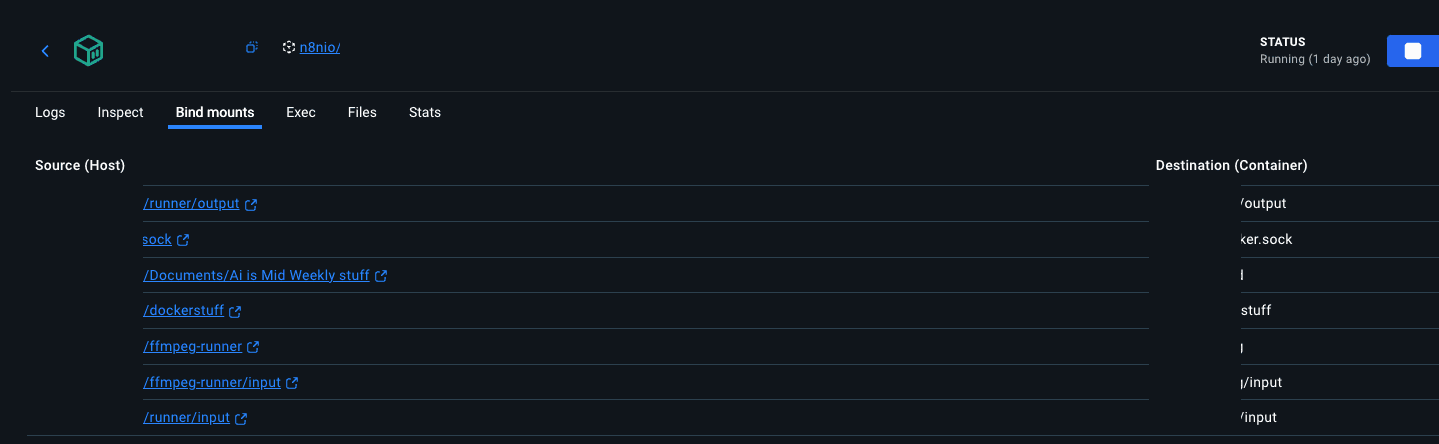
    AI video production automation stages approved assets through predictable shared storage so the workflow and rendering container agree on which files must exist and where. The documented Docker bind mounts created the controlled bridge between the workflow, local storage and the rendering container.

    Docker bind-mount workflow staging source assets for the video rendering container.
    The controlled file bridge between orchestration, host storage and the renderer.
  5. 05

    How AI video production automation renders the final video

    AI video production automation renders the final video by measuring audio duration, selecting enough footage, trimming frames, merging audio, adding captions and appending the branded outro. The production script used documented FFmpeg filters for those operations.

  6. 06

    How AI video production automation delivers files and recovers delays

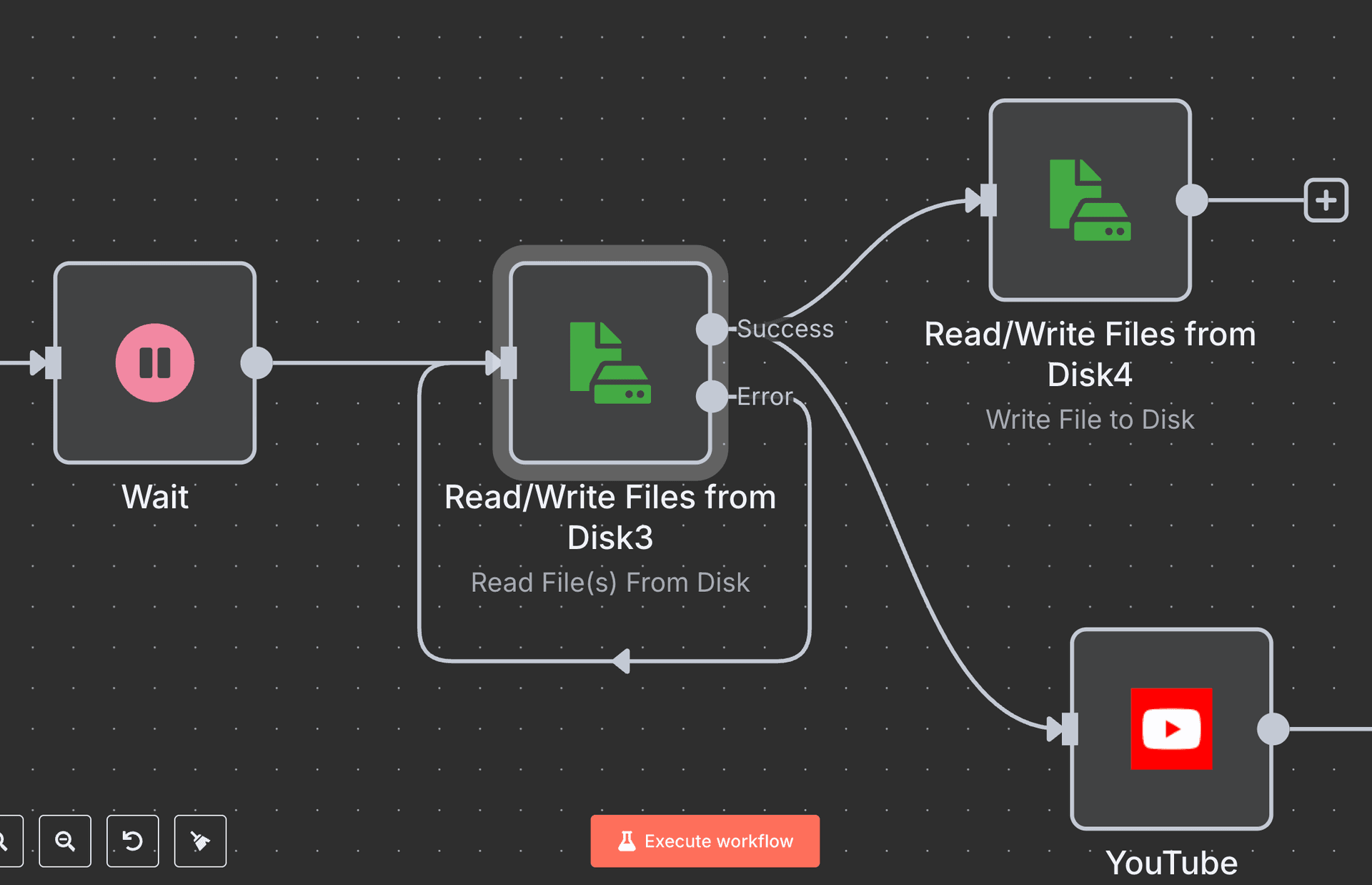
    AI video production automation delivers the final MP4 only after the workflow verifies that the rendered file is available and retries short file-read delays through controlled recovery paths. Three pickup attempts with a one-second interval protected against short file-availability delays. The approved result was copied to a mobile-accessible folder for platform publishing.

    Workflow retry branches reading the completed video output after rendering.
    Final-file pickup, controlled retries and the explicit recovery branch.

This is an AI video production automation system: a repeatable production contract spanning generation, assembly, rendering and delivery, not a collection of disconnected AI tools.

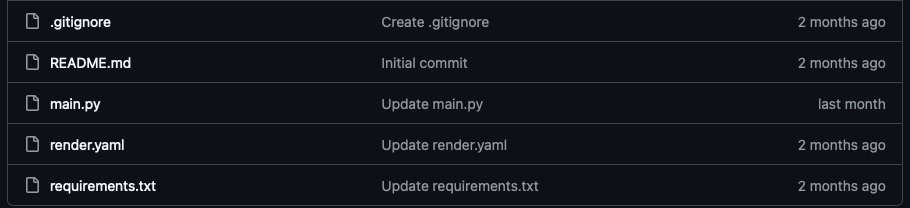
Docker and FFmpeg workflow coordinating scripts, voiceover, portrait footage and final short-form video rendering.
The operating workflow coordinating qualified stock footage with the local rendering container.

What the Lab proved

What AI video production automation proved about repeatable output

AI video production automation proved that approved content, voice, retrieved or generated footage, storage and rendering logic could operate as one repeatable production system.

Validated results:

  • 01A one-minute video rendered in under 40 seconds once source assets were ready
  • 02Seven unique portrait clips were selected after duration and duplicate filtering
  • 03Audio length controlled the final visual sequence
  • 04The renderer handled trimming, concatenation, captions, audio, branding and cleanup
  • 05Final-file retrieval included three retries and an error branch
  • 06Local rendering removed dependence on a paid cloud-rendering service for the experiment
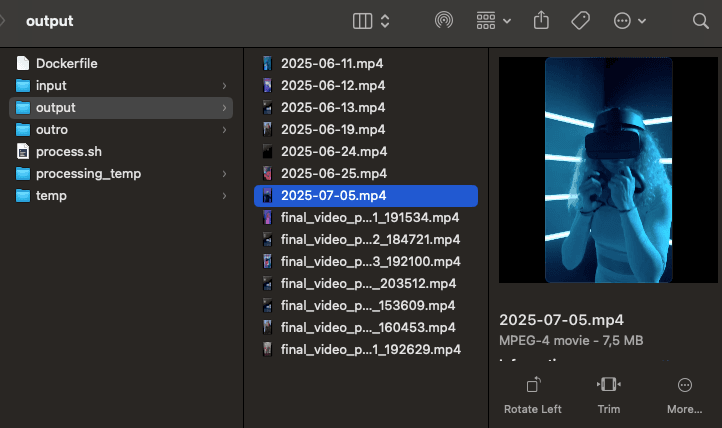
  • 07Real MP4 outputs were produced and stored by date
  • 08Platform uploads remained human-approved where direct API access was unavailable or undesirable.
Branded vertical outro frame appended to the rendered video.
The branded outro frame used as a production asset, not as performance proof.

The system was not benchmarked against a full creative studio, and the page should not invent a time-saved percentage. The verified proof is the working pipeline, the measured render time and the output files.

The failures were part of the validation

How AI video production automation handles failures after the demo

AI video production automation must detect missing files, timing delays, incompatible inputs and failed rendering steps before they quietly become missing deliverables.

  • Docker volume paths had to match exactly or FFmpeg could not see the files
  • MacOS permissions could block output writes
  • Missing video timestamps could cause merge and synchronization errors
  • Subtitle encoding, alignment, contrast and font loading required explicit handling
  • Audio and footage could drift without duration guards
  • A finished render could exist before the workflow successfully picked it up
  • Social APIs could block direct publishing even when the media file was ready.

Those failures shaped the service architecture. The result includes file contracts, validation, retries, cleanup and clear human responsibility instead of a workflow that works only while someone is presenting it. n8n's documented workflow model and error handling support this kind of recoverable orchestration.

Where this service creates value

What marketing teams can produce with AI video production automation

AI video production automation can support recurring explainers, product updates, expert content, news recaps, campaign variants and other defined formats that would otherwise be rebuilt repeatedly.

  • Recurring product explainers
  • Social-media news and insight formats
  • Podcast and article cutdowns
  • Multilingual voice and caption variants
  • Internal training updates
  • Real-estate, retail or ecommerce catalogue videos
  • Event recap templates
  • Campaign variations built from structured product or content data
  • Branded vertical video series
  • Approval-ready asset queues for marketing teams.

The system can connect to a web and CMS integration, database, content calendar, CRM, asset library or approval tool. Campaign variants can also feed governed campaign tracking systems. The correct design depends on where approved source material begins and where the finished assets must go; this is growth engineering applied to a recurring production constraint.

What OJC Labs sells

What OJC Labs delivers as an AI video production automation service

The OJC Labs AI video production automation service covers workflow design, generation and retrieval integrations, rendering infrastructure, storage contracts, validation, recovery and human approval before distribution.

  • Video-production workflow audit
  • Format and output mapping
  • Structured script-generation rules
  • TTS and voice integration
  • Footage or asset-library integration
  • Docker and FFmpeg rendering architecture
  • Captions, branding and output templates
  • Queueing, retries, monitoring and error alerts
  • Human approval stages
  • CMS, storage and publishing integration
  • Documentation and ongoing operation.

We can also recommend keeping the current manual process when production volume, variation or turnaround does not justify automation. A pipeline should remove recurring production cost, not become a technically impressive pet that needs feeding every Tuesday. When video is one output among several, it belongs inside broader content operating systems and can consume structured records from AI enrichment and structured content.

When AI video production automation is the right production investment

AI video production automation is a strong investment when video formats repeat often enough for manual assembly, coordination and rendering to become a measurable production constraint.

  • The team produces the same video structure repeatedly
  • Source content already exists in structured or approved form
  • Manual editing creates a turnaround bottleneck
  • Several aspect ratios, languages or variants are required
  • Brand elements and output rules are predictable
  • The business needs a review gate before distribution
  • The finished assets must connect to an existing content operation.

It is not designed to replace directors, cinematographers or editors on bespoke creative work. When every frame requires unique artistic judgment, automation should support the team rather than cosplay as the team.

Frequently asked questions

AI video production automation questions from marketing and procurement teams

AI video production automation should be evaluated against existing content sources, brand controls, output formats, publishing volume, review requirements and the systems already used by the team.

What is automated video production?

It is a controlled system that turns approved data, text or media into video through repeatable preparation, rendering, validation and delivery steps. Depending on the use case, AI can assist with scripts, voice, image or clip selection while deterministic code controls file handling and rendering.

Does OJC Labs generate every visual with AI?

No. The validated assembly pipeline combined AI-assisted scripting and voice with qualified stock footage and deterministic FFmpeg rendering. OJC Labs separately validated image-to-video generation and can integrate generative-video services where they improve the required format, but it does not pretend every production needs generated visuals.

Can the videos follow our brand system?

Yes. Templates can control aspect ratio, typography, caption styling, logos, outros, safe zones and output naming. Brand-sensitive work can include a human approval stage before final rendering or publishing.

Can the pipeline publish directly to social platforms?

Only where the platform, account type and API permissions support reliable publishing. Otherwise the system delivers approved, caption-ready assets to a shared or mobile-accessible location for final upload.

Is Docker and FFmpeg always the right stack?

No. They were appropriate for this test because the format was repeatable and local rendering reduced external cost. OJC Labs selects the rendering and orchestration stack according to volume, security, output complexity and maintenance requirements. The best n8n workflows for business automation illustrate orchestration patterns, while how to build an AI automation system covers the wider architecture decision.

Can OJC Labs add multilingual versions?

Yes. The architecture can branch into approved translations, language-specific TTS, captions and output files. Each language still needs terminology and brand review rather than a blind translation step.

Final CTA

Plan AI video production automation around your recurring formats

AI video production automation should begin with the formats the team repeatedly rebuilds, the production stages creating delay and the quality decisions that must remain human.

OJC Labs can audit your current production chain and determine whether AI video production automation can reduce turnaround, increase output capacity and keep brand control intact.

We will identify the repeatable steps, the creative decisions that should remain human and the integrations required to move from approved source to finished asset.

    AI Video Production Automation for Marketing | OJC Labs