
OJC Labs Case Study · AI is Mid
AI content automation system for controlled multi-channel publishing
An AI content automation system connects approved source material, structured generation, validation and publishing so a marketing team can produce several formats without rebuilding the workflow for every channel.
OJC Labs built AI is Mid as a working media operation to test that complete chain. One scored content queue powered articles, podcast audio, structured web feeds, email campaigns, social copy, images and short-form video workflows.
The project was not built to show that AI can write. Everyone and their toaster has proved that. It was built to validate an AI content automation system that could survive real inputs, inconsistent APIs, malformed outputs and multi-channel publishing requirements.
The service opportunity
When an AI content automation system removes the real production bottleneck
An AI content automation system creates value when recurring research, approvals, formatting and publishing consume more team capacity than the content strategy itself.
Research lives in one place. Drafts live somewhere else. Images wait in chat threads. Podcast files are renamed manually. Social captions are recreated from scratch. Publishing depends on the one person who remembers which box still needs ticking. Adding AI to that mess does not create scale. It creates a faster mess.
OJC Labs used AI is Mid to validate a different model: treat content as structured operational data that moves through a controlled pipeline. Our guide explains how a content automation system works and where it creates operational leverage.
For a client, that can mean:
- Turning approved source material into several channel-ready formats;
- Reducing repetitive handoffs between editorial, marketing and production;
- Keeping metadata, files and campaign records consistent;
- Introducing AI without losing review, traceability or brand control;
- Making failures visible before they quietly become missing posts;
- Creating a content operating system that can grow without multiplying admin work.
Why OJC Labs built it inside the Lab
How OJC Labs validates an AI content automation system before client deployment
An AI content automation system should be tested against real inputs, malformed outputs, API failures and approval requirements before it becomes part of a client's daily operation.
With AI is Mid, OJC Labs tested the unglamorous parts that decide whether automation survives production:
- Extracting usable source text from inconsistent websites;
- Processing inputs that exceeded platform limits;
- Constraining model responses to structured formats;
- Rejecting incomplete or malformed output;
- Routing content according to relevance and production value;
- Updating JSON and XML feeds without duplicates or corruption;
- Recovering from failed API calls;
- Separating automated production from human approval;
- Working around platforms that do not provide reliable publishing access.
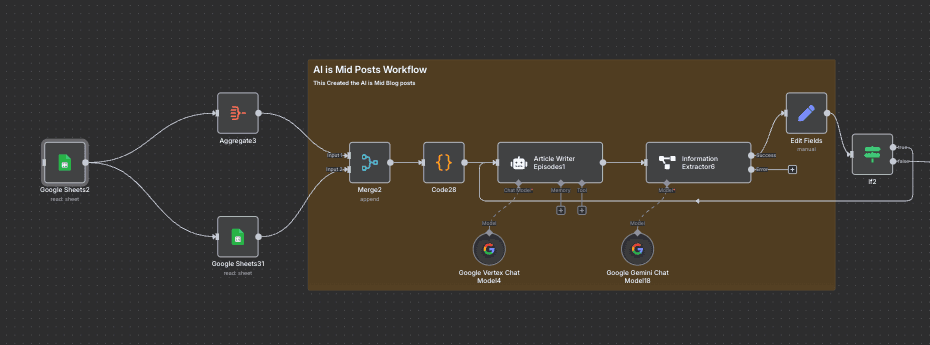
The result is not a theoretical diagram. It is a tested architecture supported by workflow records, generated files, published outputs, screenshots and video results. The orchestration layer used documented n8n workflows and controlled error-handling paths to expose and recover failures.
The Lab is where OJC Labs spends its own time finding the weak points, so clients do not spend their budget finding them later.
What the validated system can operate
What an AI content automation system can produce from one approved source
An AI content automation system can turn one approved and scored source record into coordinated editorial, audio, website, email, social and video outputs.
How an AI content automation system produces editorial content
An AI content automation system produces editorial content by cleaning and scoring source material before routing high-value items to long-form articles or podcast scripts and lower-value items to a digest or exclusion path.
How an AI content automation system produces podcast audio
An AI content automation system can convert an approved script into controlled voice output, archive the audio and connect it to the corresponding website record without a separate manual production step. The tested flow generated 30 to 90-second voiceovers using the kind of controlled pronunciation and timing supported by Google Cloud Text-to-Speech SSML.
How an AI content automation system publishes website and feed updates
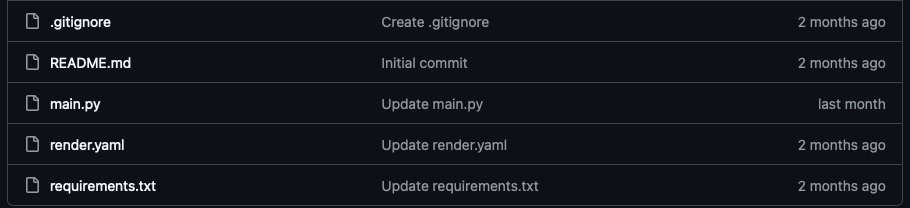
An AI content automation system can publish structured JSON, HTML and XML/RSS outputs after duplicate checks, required-field validation and feed-integrity controls have passed.
How an AI content automation system coordinates email and social distribution
An AI content automation system can adapt approved content for email and channel-specific social distribution while preserving deliberate scheduling and human approval gates.
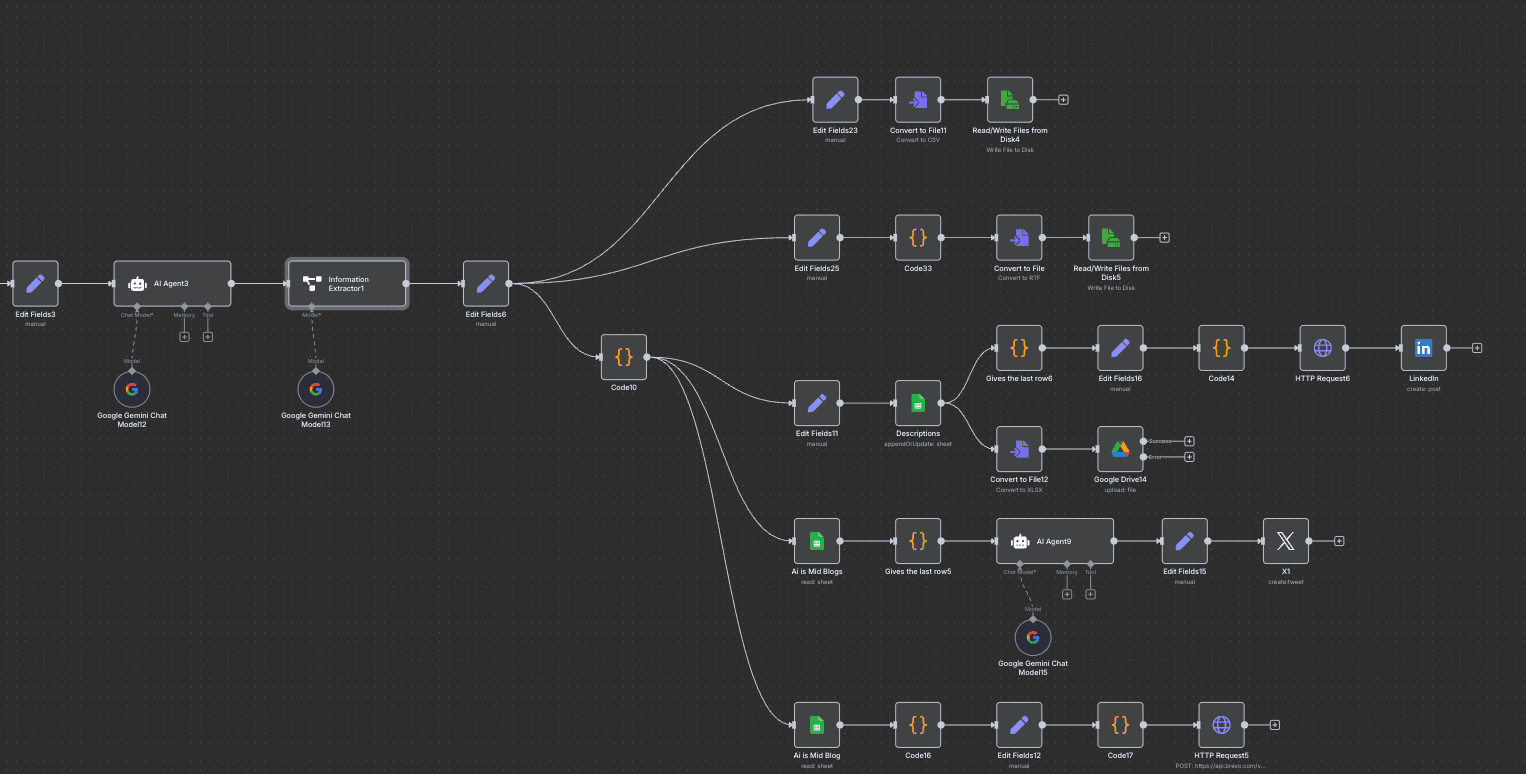

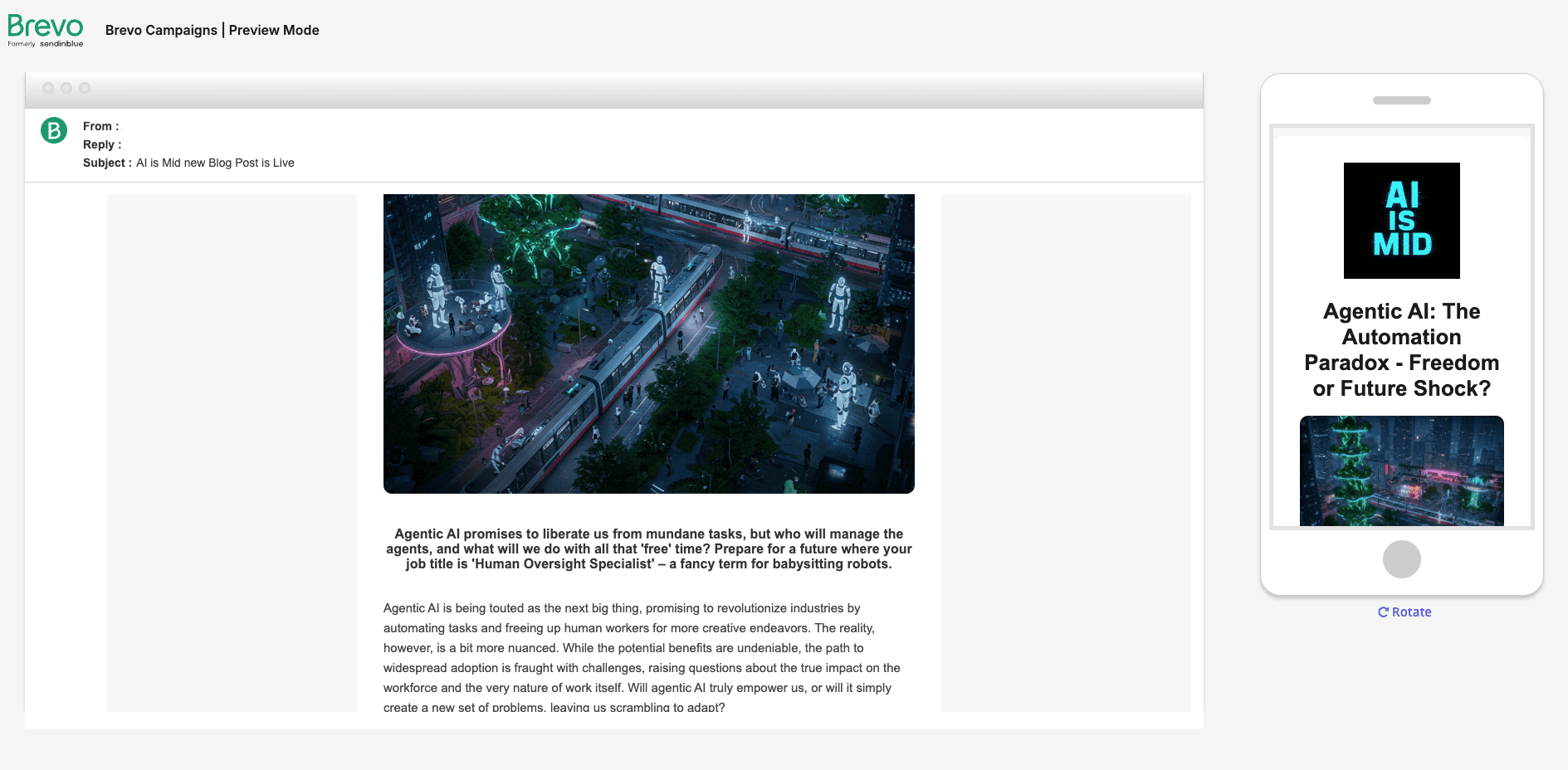
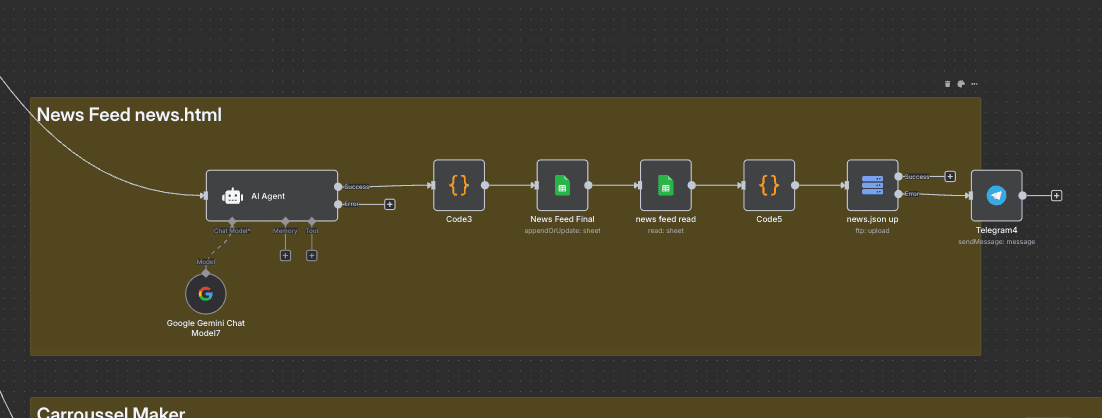
How an AI content automation system connects to automated video production
An AI content automation system can send the same approved source record into a separate video pipeline that assembles scripts, voice, footage, captions and branded output. The AI video production automation case study shows the tested rendering and recovery layer.
This is what multi-channel content publishing looks like when the channels share one operating layer instead of creating six disconnected jobs.
Control mattered more than generation
How an AI content automation system controls inaccurate or incomplete output
An AI content automation system controls AI output by defining what the model may transform, requiring structured responses and blocking incomplete records before publishing continues.
Validation controls included:
- Raw JSON response requirements;
- Schema-based information extraction;
- Missing-field detection and regeneration;
- Explicit rules against inventing companies, people, figures, dates, products or outcomes;
- Comparison with historical posts to reduce repetition;
- HTML and markdown cleanup before storage;
- Duplicate and date checks before feed updates;
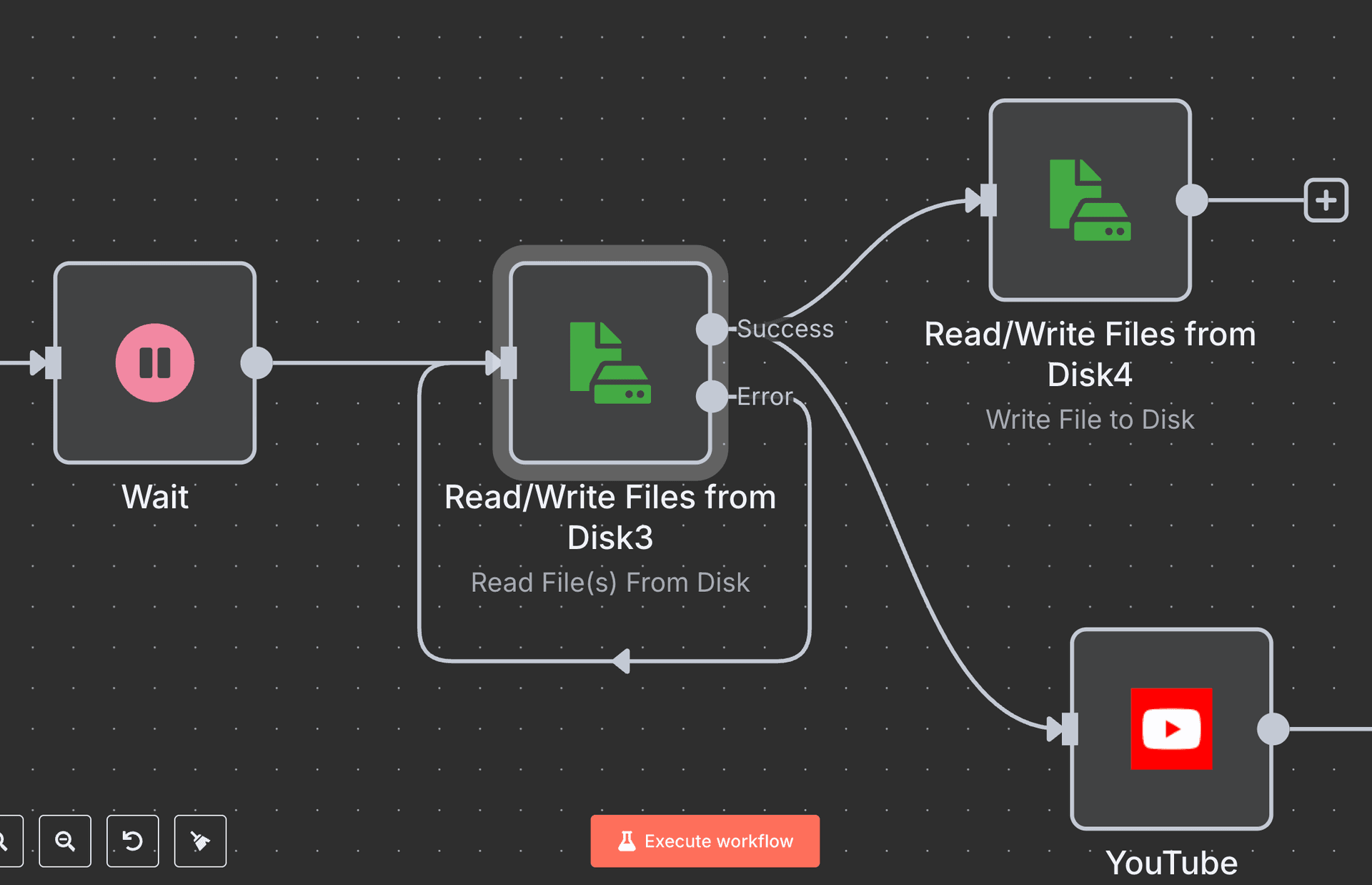
- Retry paths and Telegram notifications around failure-prone steps.
This is the difference between buying AI-generated copy and commissioning an AI publishing workflow. The first gives you an output. The second gives your team a repeatable operation with known rules. Our comparison of AI agents and automation workflows explains why that control layer matters.
Proof from the working system
What proves the AI content automation system works beyond a demo
The AI content automation system is supported by workflow records, generated files, publishing branches, failure handling and completed media outputs rather than a diagram presented as implementation proof.
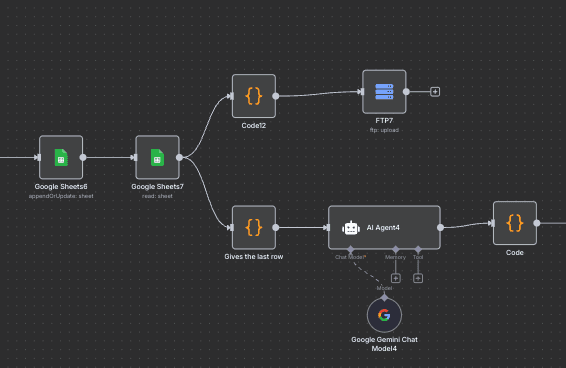
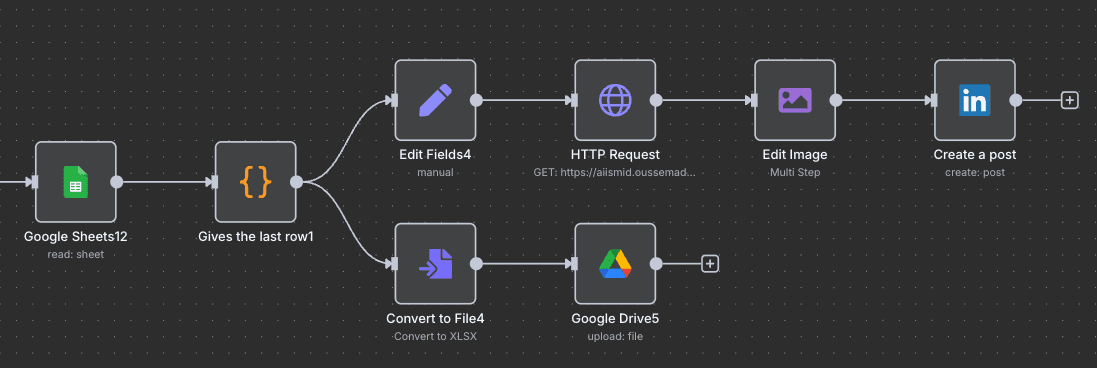
- n8n workflow views showing source ingestion, historical-content comparison and structured article production;
- parallel publishing branches for web, social and archival outputs;
- the Flask and Google Cloud TTS workflow used for voice production;
- Brevo campaign orchestration;
- JSON feed upload with Telegram confirmation;
- Docker bind mounts and FFmpeg filters supporting rendering workflows;
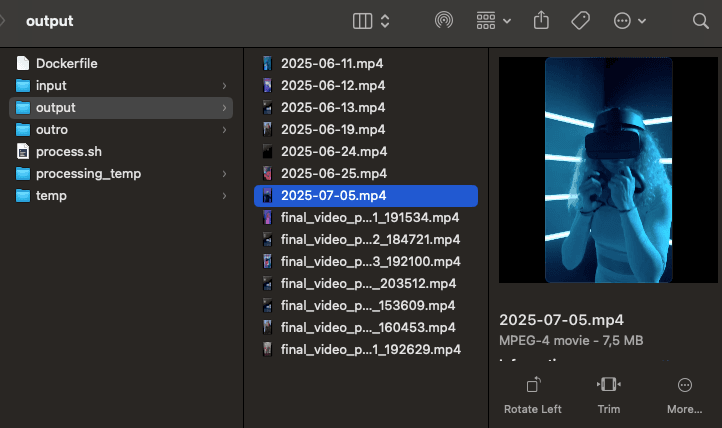
- real MP4 outputs created by the system;
- retry and final-file pickup branches.
The case study shows these assets beside the business function they prove. A workflow screenshot is useful because it demonstrates operating depth. It should not be presented as abstract wall art for people who enjoy tiny boxes connected by spaghetti.
Results validated in the Lab
What the AI content automation system validated in production testing
The AI content automation system validated that one scored source queue could support articles, podcast audio, feeds, email, social copy, artwork and video workflows within one controlled operation.
- One scored source queue supplied articles, podcast audio, web feeds, email, social copy, artwork and video workflows.
- The Daily Digest chain moved from selected source summaries through script, audio, archive, blog data and XML feed without a manual production step.
- The audio service produced 30 to 90-second voiceovers automatically.
- Average measured workflow-node execution time was 2.4 seconds during benchmarking.
- Agent-dependent workflows used two to three retry branches.
- Publishing limits were handled honestly with human approval gates rather than fake claims of total autonomy.
- The experiment validated a reusable architecture OJC Labs can adapt to a client's content, governance and channel requirements.
These results prove technical and operational capability. They do not claim audience growth, revenue or search rankings that the experiment was not designed to measure.
What OJC Labs can build for a client
What OJC Labs delivers as an AI content automation system service
The OJC Labs AI content automation system service covers workflow auditing, system design, integrations, structured AI controls, publishing logic, monitoring and the approval gates required by the client's operation.
- content intake and approval workflows;
- research and source-enrichment pipelines;
- controlled AI writing and repurposing inside content operating systems;
- automated podcast and voice production;
- content databases, taxonomies and asset records connected to SEO and indexing systems;
- Web and CMS systems connected through JSON, RSS and API publishing flows;
- Email and CRM systems for newsletters, nurture and subscriber operations;
- Messaging systems for controlled alerts, approvals and channel-ready distribution;
- workflow monitoring, alerts and recovery logic;
- human approval gates for legal, editorial or brand-sensitive content;
- growth engineering reporting that shows what ran, what failed and what still needs review.
We do not begin by forcing a preferred tool into the business. We begin with the production constraint, the required outputs, the risk level and the systems already in place. Where the existing CMS exposes reliable interfaces, automating publishing with APIs can remove handoffs without replacing the editorial system.
When an AI content automation system is the right investment
An AI content automation system is a strong investment when recurring content volume, repeated channel adaptation and manual coordination are growing faster than the team's available production capacity.
- the same source material is recreated for several channels;
- publishing volume is increasing faster than team capacity;
- content approval depends on manual reminders and file chasing;
- AI output still requires extensive cleanup before it can be used;
- content, metadata and assets are stored across disconnected tools;
- failed automations are discovered by customers before the team sees them;
- the business needs scale without giving up editorial control.
It is not the right answer when the content programme is small, entirely bespoke or better handled by a simple documented process. Automation should remove a real constraint. Otherwise it is just an expensive way to avoid writing a checklist.
Frequently asked questions
AI content automation system questions from marketing and procurement teams
An AI content automation system must be evaluated against the buyer's existing CMS, governance requirements, publishing volume, review process and tolerance for operational risk.
What is an AI content automation system?
It is a controlled workflow that moves content from approved inputs through transformation, validation, publishing and distribution. AI may generate or enrich parts of the content, but the wider system controls data, decisions, destinations, failures and human approval.
Does OJC Labs automate the complete publishing process?
Where platform access and risk allow it, yes. Where APIs are restricted or editorial approval is required, OJC Labs designs a deliberate human gate. The objective is reliable production, not an impressive autonomy percentage attached to a fragile workflow.
Can this connect to our current CMS and marketing tools?
Usually. OJC Labs maps the current CMS, CRM, email, storage and analytics stack before recommending the integration architecture. The service can use APIs, webhooks, database events, structured files or controlled manual approvals depending on the system. For libraries that also need metadata and link recommendations, see the AI enrichment and semantic-linking case study.
Is n8n required?
No. n8n was suitable for the tested AI is Mid architecture because it combined visual orchestration, code, APIs, branching and error paths. OJC Labs remains tool-aware rather than tool-loyal and selects the stack around the client's requirements.
How does OJC Labs control inaccurate AI output?
The system can use source restrictions, structured response schemas, required fields, validation rules, confidence thresholds, retry paths and human review. The exact controls depend on the consequence of an incorrect output.
Can OJC Labs operate the system after launch?
Yes. An engagement can include monitoring, iteration, model or API changes, workflow maintenance and new production branches as the content operation grows.